Ireland Pharmaceutical Manufacturing: Energy Crisis, Quality 4.0,
and the CGT Inflection Point
Ireland's pharmaceutical manufacturing sector accounts for roughly €99.9 billion in annual exports. With 90+ pharmaceutical companies, 213 manufacturing facilities, and over 77,500 directly employed workers, the nation's biopharma ecosystem has no equal in Europe. Nine of the world's top 10 pharmaceutical companies have significant operations here. The United States relies so heavily on Irish-manufactured medicines that in March 2025, the sitting US president remarked that a small island of five million people "has got the entire US pharmaceutical industry in its grasp."
Yet this dominance masks an uncomfortable reality. Ireland's pharmaceutical manufacturing sector is simultaneously facing three crisis level challenges that demand immediate, coordinated action. For executives, investors, and strategists, understanding these pressures, and the unique opportunities they create, is essential for positioning themselves through 2026 and beyond.
The Irish Pharma Paradox: Dominance Under Pressure
Let's establish the baseline. Ireland is the world's third-largest pharmaceutical exporter. The country hosts 50 FDA-approved pharmaceutical plants—more than most entire nations. The infrastructure investment committed to biologics manufacturing Ireland since 2003 exceeds €10 billion. Pfizer operates some of the world's largest integrated biotechnology facilities here. Johnson & Johnson employs over 6,000 people across Cork, Dublin, Limerick, and Galway. Eli Lilly is expanding €1.8 billion in new capacity for obesity and Alzheimer's therapeutics.
From a manufacturing excellence standpoint, Ireland punches well above its weight. The productivity advantage is staggering: Irish pharmaceutical workers generate €439.9 in value per hour versus €41.9 across the EU average. This is nearly 10 times more productive. This productivity edge has anchored Ireland's position as Europe's most attractive location for biopharma manufacturing capital investment.
But beneath this success story lies structural turbulence that's reshaping investment calculations and competitive positioning across the entire sector.
€99.9B
Annual Pharmaceutical Exports

50
FDA-Approved Plants

77,500+
Directly Employed Workers
The Energy Crisis: Ireland's Hidden Manufacturing Cost
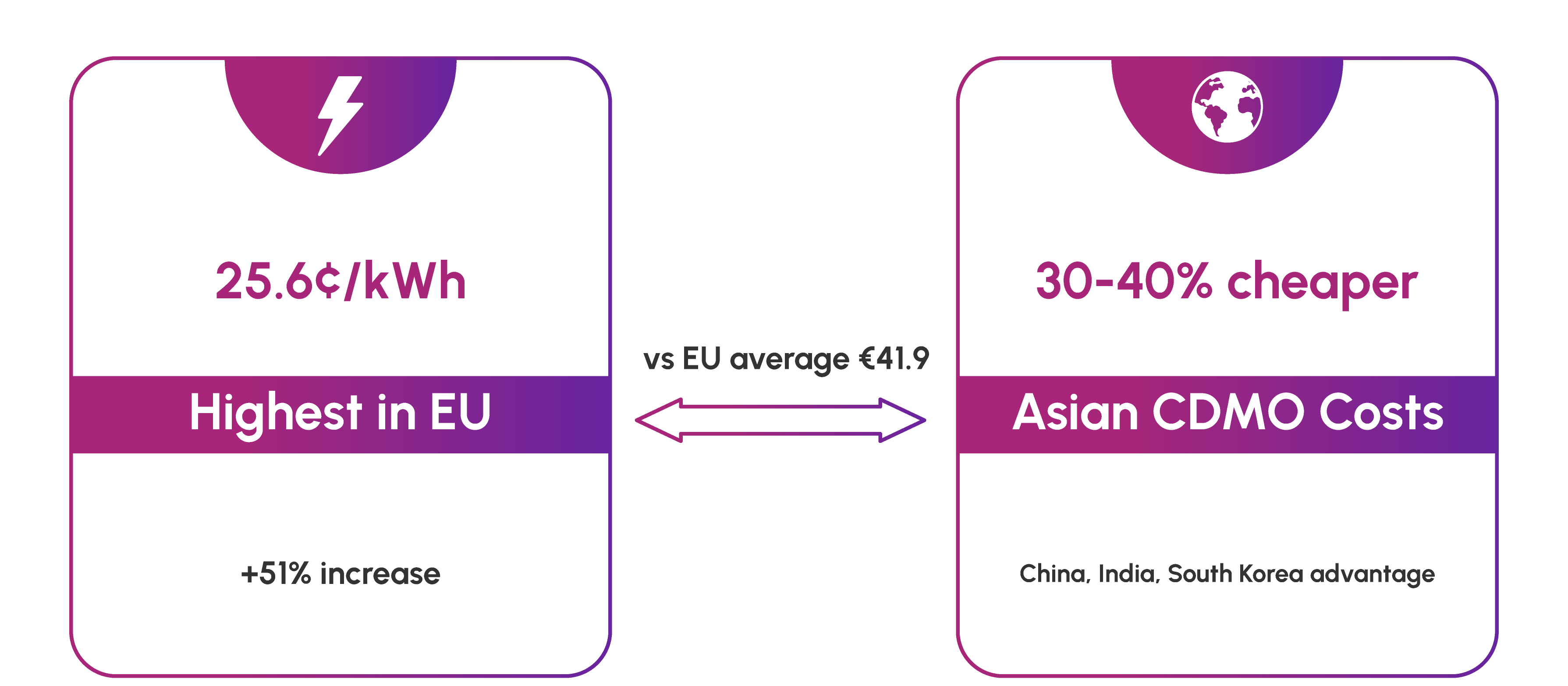
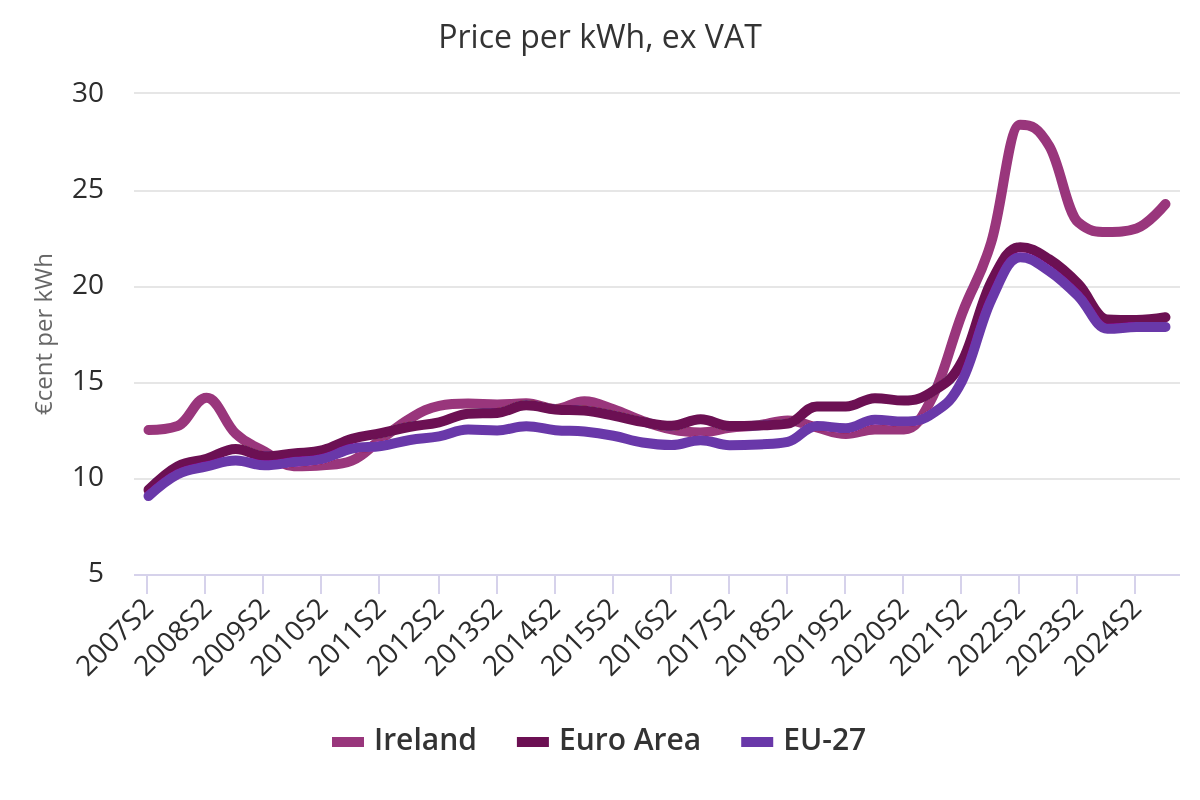
The first crisis is energy. Ireland pharmaceutical manufacturing electricity costs have become Europe's highest. In 2025, Ireland's industrial electricity prices reached 25.6 cents per kilowatt hour. This is a 51% increase from pre-crisis levels and the highest rate across the EU. For a capital intensive, energy hungry industry like pharmaceuticals, this translates directly into operational bottom lines.
Consider the quantification: a typical large scale biologics facility consumes 20-30 megawatts continuously. At 25.6 cents per kWh, that's roughly €4 6 million annually in additional energy costs compared to pre-2021 pricing. For a pharmaceutical company operating multiple facilities in Ireland, and most major firms do, the annual energy cost burden reaches €5 15 million per operation.
This creates a competitive pressure that Ireland hasn't faced since the 1980s. Asian CDMOs (contract manufacturing organisations) operating in China, South Korea, and India can produce at 30-40% lower cost structures, partly because their energy infrastructure is substantially cheaper. European competitors in Germany, Belgium, and the Netherlands face similar energy pressures, but have been investing in renewables infrastructure more aggressively, offsetting cost increases through efficiency gains.
For biologics manufacturing Ireland, the question becomes acute: how do you maintain the €439.9/hour productivity advantage when energy costs are eroding COGS margins by 5-10%? The answer isn't simple. Power purchase agreements (PPAs) with renewable energy providers offer relief but require 3–5-year commitments and upfront capital. On site generation (solar, wind) faces planning delays averaging 12 18 months in Ireland. Digital energy management systems can reduce consumption by 15-20% but require facility upgrades costing €2 5 million per site.
This is why energy has become the defining infrastructure challenge for pharmaceutical manufacturing in Ireland heading into 2026. It's not an abstract problem—it's a quarterly P&L reality for every major operator in the country.
Quality 4.0 Transformation: 50 Sites, Simultaneous Modernisation
The second crisis is less visible but equally consequential: regulatory expectations and manufacturing standards are advancing faster than most facilities can practically adapt.
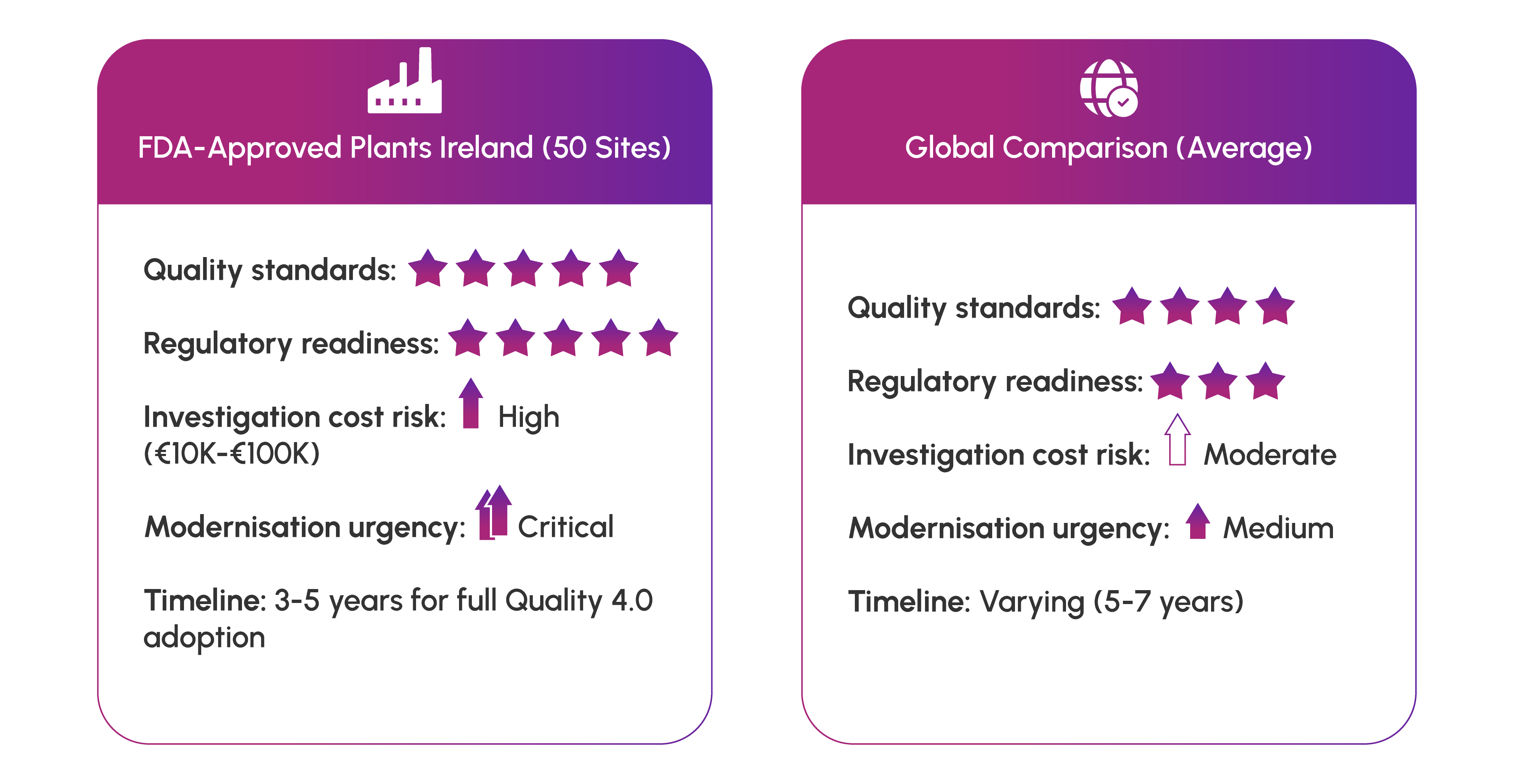
Ireland's 50 FDA approved pharmaceutical plants represent an extraordinary asset. That's regulatory credibility, manufacturing expertise, and capital infrastructure concentrated in a single region. But maintaining FDA approval isn't static. Regulatory agencies globally, the FDA, EMA, and HPRA (Ireland's health products regulatory authority), are increasingly demanding "Quality 4.0" compliance. This includes integrated digital systems, real-time data analytics, predictive quality management, and advanced process controls.
The challenge is operational: retrofitting 50 existing facilities to Quality 4.0 standards whilst maintaining continuous production is extraordinarily complex. A single major deviation investigation can cost €10,000 €100,000 in regulatory scrutiny, documentation, and remediation. A serious quality failure can trigger €1 million+ in combined investigation costs, batch losses, and regulatory sanctions. Simultaneously modernising facilities to avoid these failures requires phased capital investment, workforce retraining, and technology adoption across hundreds of manufacturing processes.
For executives at these 50 FDA approved plants, the calculation is stark: invest proactively in Quality 4.0 transformation now, or face reactive investigations that are more expensive, more damaging to reputation, and more disruptive operationally. Yet coordinating this transformation across 50 independent sites, with different technical architectures, different vendor relationships, and different regulatory histories, demands knowledge sharing, best practice transfer, and peer benchmarking at scale.
This is precisely what most facility leaders lack: access to peers facing identical challenges, transparency into what's working at comparable sites, and connection to solution providers who have solved Quality 4.0 challenges at similar scale and complexity.
The CGT Opportunity: Ireland's Next Manufacturing Chapter
The third element is opportunity, not crisis. But it's equally urgent.
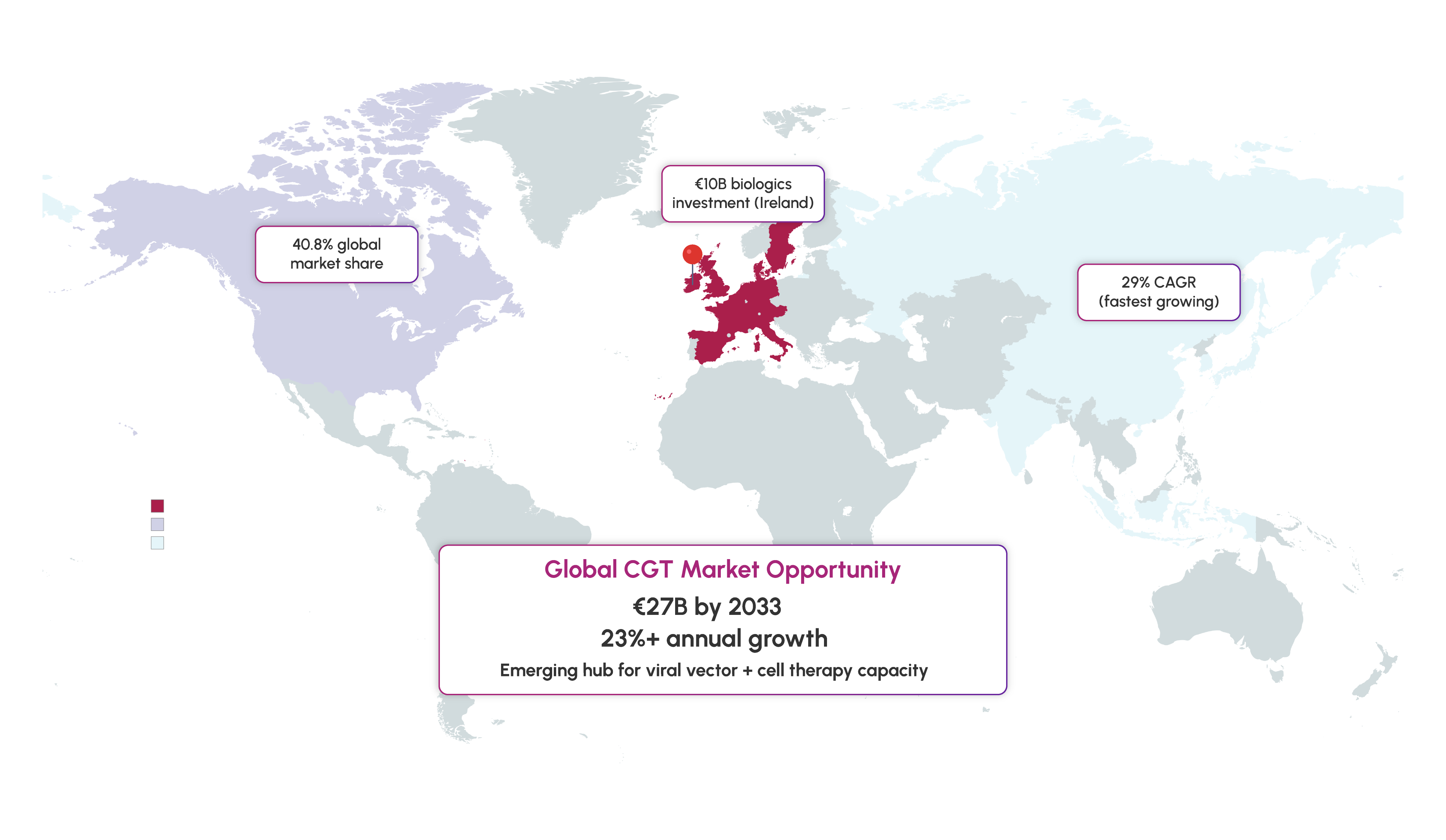
Cell and gene therapy manufacturing Ireland represents a €50 100 million annual opportunity that Ireland is currently underdeveloping. Globally, the CGT (cell and gene therapy) market is experiencing explosive growth. Over 2,000 active clinical trials are progressing. Regulatory approvals are accelerating. Multiple therapies for previously incurable conditions such as sickle cell disease, certain cancers, and genetic blindness are moving toward commercial manufacturing and patient access.
Yet cell and gene therapy manufacturing is fundamentally different from conventional biologics. Viral vector capacity is constrained at >90% utilisation globally. Manufacturing costs per patient can reach €100,000 €500,000. Regulatory pathways for ATMP manufacturing (Advanced Therapy Medicinal Products) are still evolving, creating uncertainty for developers making outsourcing decisions. The talent required, specialists in viral vectors, process engineering, and regulatory strategy, is scarce.
Ireland is uniquely positioned to capture significant share of CGT manufacturing. Pfizer CentreOne operates manufacturing capacity specifically for cell therapies. WuXi Biologics' Dundalk facility achieved its first EMA approval for CGT manufacturing in August 2020. Takeda operates a stem cell manufacturing facility in Dublin. CCMI operates a GMP licensed ATMP manufacturing site in Galway. Trinity College Dublin houses a leading CAR T programme.
The infrastructure exists. Expertise exists. What's missing is coordinated ecosystem positioning and stakeholder alignment. Developers evaluating ATMP manufacturing don't know where Ireland's capacity sits relative to competitors. Technology vendors don't understand Ireland specific CGT challenges. Academic institutions aren't optimally connected to commercial manufacturing partners. Regulators and industry aren't aligned on how to accelerate Ireland's CGT capability development.
In essence, Ireland has the pieces for cell and gene therapy manufacturing leadership but hasn't assembled them into a coherent, visible, strategically managed ecosystem.
Why Ireland? The Competitive Advantages No Other Region Matches
Understanding why Ireland is positioned to solve these three challenges requires examining what competitors lack.

FDA Compliance Culture.
Ireland's 50 FDA approved pharmaceutical plants represent the highest concentration of FDA approved capacity outside the United States. This isn't accidental. It reflects 60+ years of regulatory discipline, management investment in compliance systems, and a cultural expectation that regulatory excellence is nonnegotiable. This culture doesn't transfer easily. A CDMO based in Asia might claim 99.2% batch success rates, but hasn't navigated FDA inspections, establishment inspections, or OAI (Official Action Indicated) investigations the way Ireland's mature manufacturing sites have. This regulatory credibility is a moat that's difficult for competitors to replicate.
Energy Innovation Leadership Potential.
Whilst Ireland currently faces the highest electricity costs in Europe, the country has world leading wind and tidal resources. Recent government investment in renewable energy infrastructure (€35 billion announced through 2030) is beginning to shift the equation. By 2026 2027, Ireland's renewable capacity will begin offsetting fossil fuel dependence, potentially creating an energy cost advantage by 2028 2030. This creates a strategic inflection point: operators who solve their energy challenges now through PPAs, efficiency investments, and on-site generation will benefit disproportionately as grid costs decline.
Talent Density and Ecosystem Effects.
With 77,500 directly employed pharmaceutical workers and another 77,500+ in supporting services, Ireland has created a self-reinforcing talent ecosystem. Engineers trained at one facility bring that expertise to competitors or suppliers. NIBRT (National Institute for Bioprocessing Research and Training) trains 300+ specialists annually in bioprocessing and advanced manufacturing. University partnerships in Dublin, Cork, and Galway are specifically developing CGT focused curricula. This talent density is a fundamental competitive advan
Geopolitical Positioning.
Post Brexit, Ireland's regulatory alignment with EU agencies combined with direct US market access has created a unique strategic position. Companies manufacturing in Ireland serve EU markets with full regulatory reciprocity. Simultaneously, Irish manufacturing can service US supply chains with familiar regulatory relationships. This EU US gateway positioning is increasingly valuable as companies geographically diversify supply chains to reduce political risk.

FDA Compliance Culture
60+ years
Regulatory Excellence
Energy Innovation
€35B
Renewable Investment (2030)

Talent Ecosystem
300+
GMP Specialists Trained Annually

Geopolitical Positioning
EU-US
Strategic Gateway
The Dual-Stream Opportunity: Biologics Excellence Meets CGT Emergence
What creates urgency for 2026 isn't any single challenge or opportunity. It's the convergence of all three simultaneously.
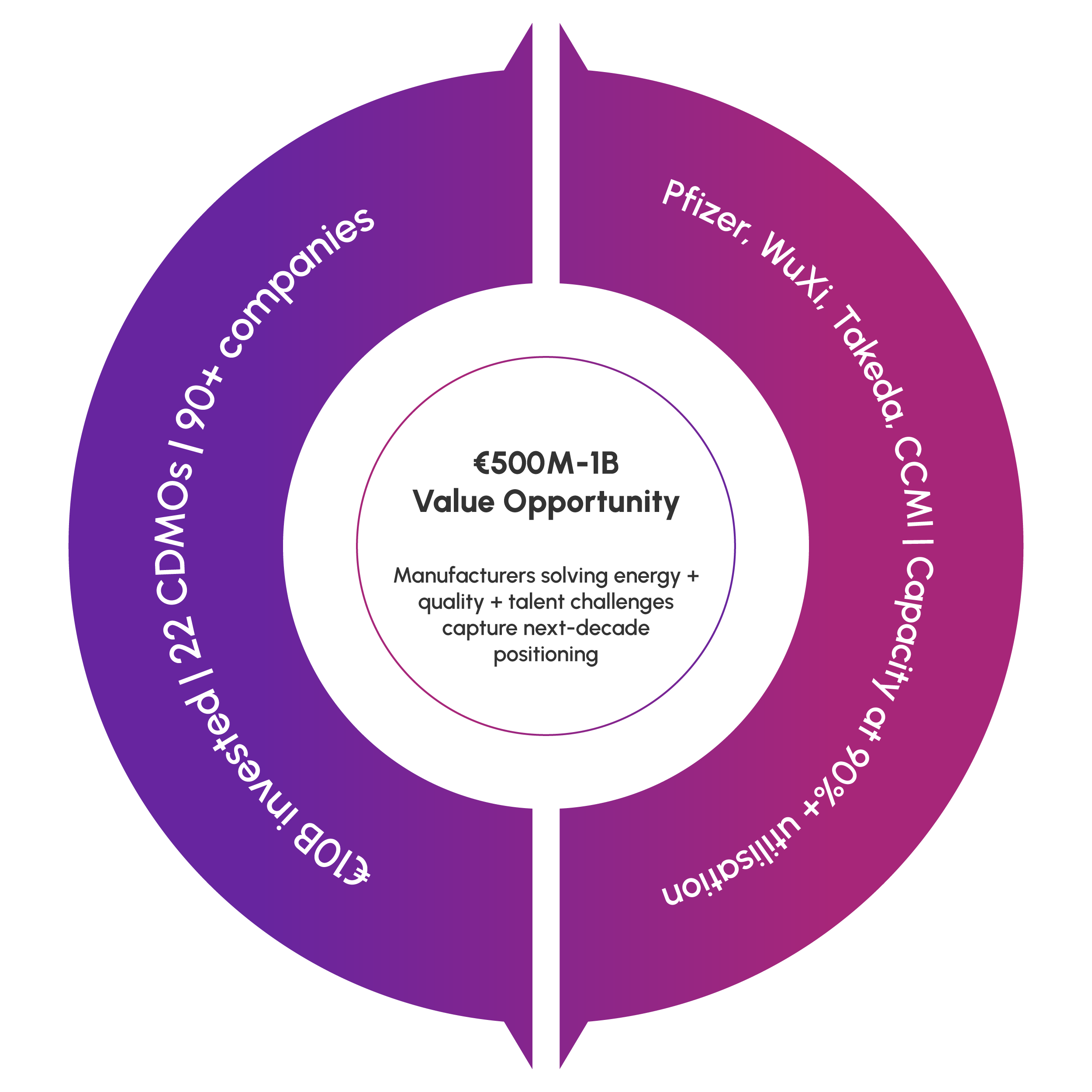
Ireland's biologics manufacturing legacy (€10 billion invested, 22 CDMOs, 90+ biopharma companies, world leading productivity) is the foundation. But that foundation is under pressure from energy costs and quality modernisation requirements. Simultaneously, CGT represents the next growth chapter. But only if Ireland can position itself before competitors (UK, Germany, Asia) capture the mindshare and investment capital in that space.
The strategic insight is this: companies that solve energy, quality, and talent challenges whilst simultaneously capturing cell and gene therapy manufacturing capacity will dominate Ireland's pharmaceutical ecosystem through 2030.

For Irish biologics CDMO operators, this means:
- Investing in energy efficiency now to protect current revenue bases
- Adopting Quality 4.0 to pre-empt regulatory issues and position for premium pricing
- Expanding into CGT capabilities to diversify revenue streams and capture next-generation clients
For pharmaceutical manufacturers operating Irish facilities, this means:
- Rationalising energy consumption through efficiency and PPAs
- Accelerating Quality 4.0 modernisation before forced by regulatory action
- Developing explicit CGT strategies (in-house or through partnerships) to address portfolio gaps
For technology vendors, this means:
- Targeting Irish facilities with energy management solutions addressing the specific €25.6c/kWh cost structure
- Selling Quality 4.0 solutions to the 50 FDA-approved plants addressing regulatory harmonisation
- Positioning CGT-focused offerings to emerging ATMP manufacturing partnerships
The Competitive Window: 12-18 Months to Positioning
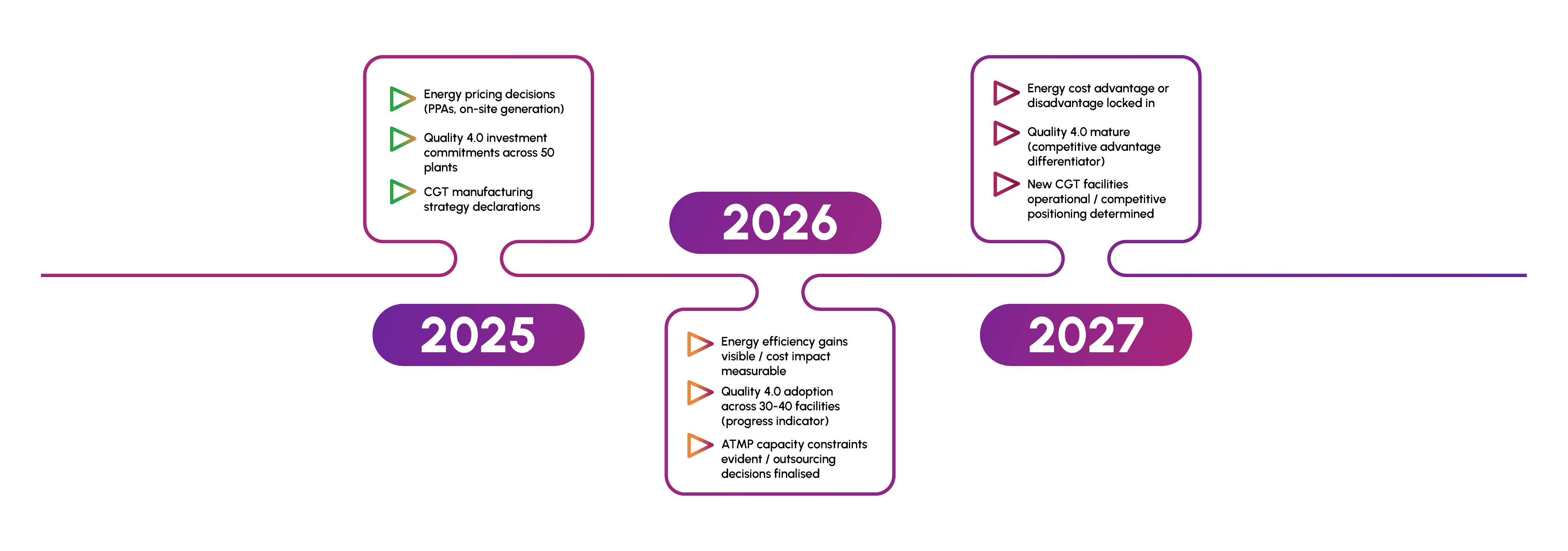
What makes this moment critical is timing. By mid 2027, several inflection points will be apparent:
Energy pricing will have either stabilised through PPA adoption and renewable capacity additions or continued escalating. Companies that invested in solutions in 2025 will have captured cost advantages. Latecomers will face structural disadvantages.
Quality 4.0 maturity across Ireland's 50 FDA approved plants will be evident. Those that invested proactively will have earned regulatory goodwill, reduced investigation risk, and premium pricing power. Those that are delayed will face accumulated technical debt and reactive remediation.
CGT capacity constraints will have either eased through new capacity coming online or tightened further as demand exceeds supply. Ireland's positioning will be determined by investment decisions made in 2025 2026.
This is why 2026 represents such a concentrated moment of strategic importance. The decisions made now, by manufacturers, CDMOs, technology vendors, and policy makers, will determine competitive positioning through the next decade.
Decisions made now determine competitive positioning through 2035
Knowledge-Sharing as Competitive Strategy
The path forward requires more than individual company action. It requires coordinated, transparent dialogue across the ecosystem.
Pharmaceutical manufacturing sites facing energy pressures need peer connection to share what's working. Quality leaders modernising 50 FDA approved facilities need best practice frameworks for Quality 4.0 implementation. CGT developers need visibility into Ireland's emerging ATMP manufacturing capacity and regulatory pathway strategy. Technology vendors need direct engagement with the facilities and problems they're positioned to solve.
This knowledge sharing doesn't happen naturally. It requires platforms, physical venues where stakeholders convene, learn from peers, evaluate partnerships, and coordinate strategies. It requires governance structures that encourage transparency without compromising competitive advantage. It requires trusted conveners who have deep relationships across the ecosystem and credibility with all stakeholder groups.
For an industry as distributed and complex as pharmaceutical manufacturing in Ireland, spanning 90+ companies, 213 facilities, multiple regulatory jurisdictions, and competing national interests, these convening spaces are essential infrastructure for coordination.
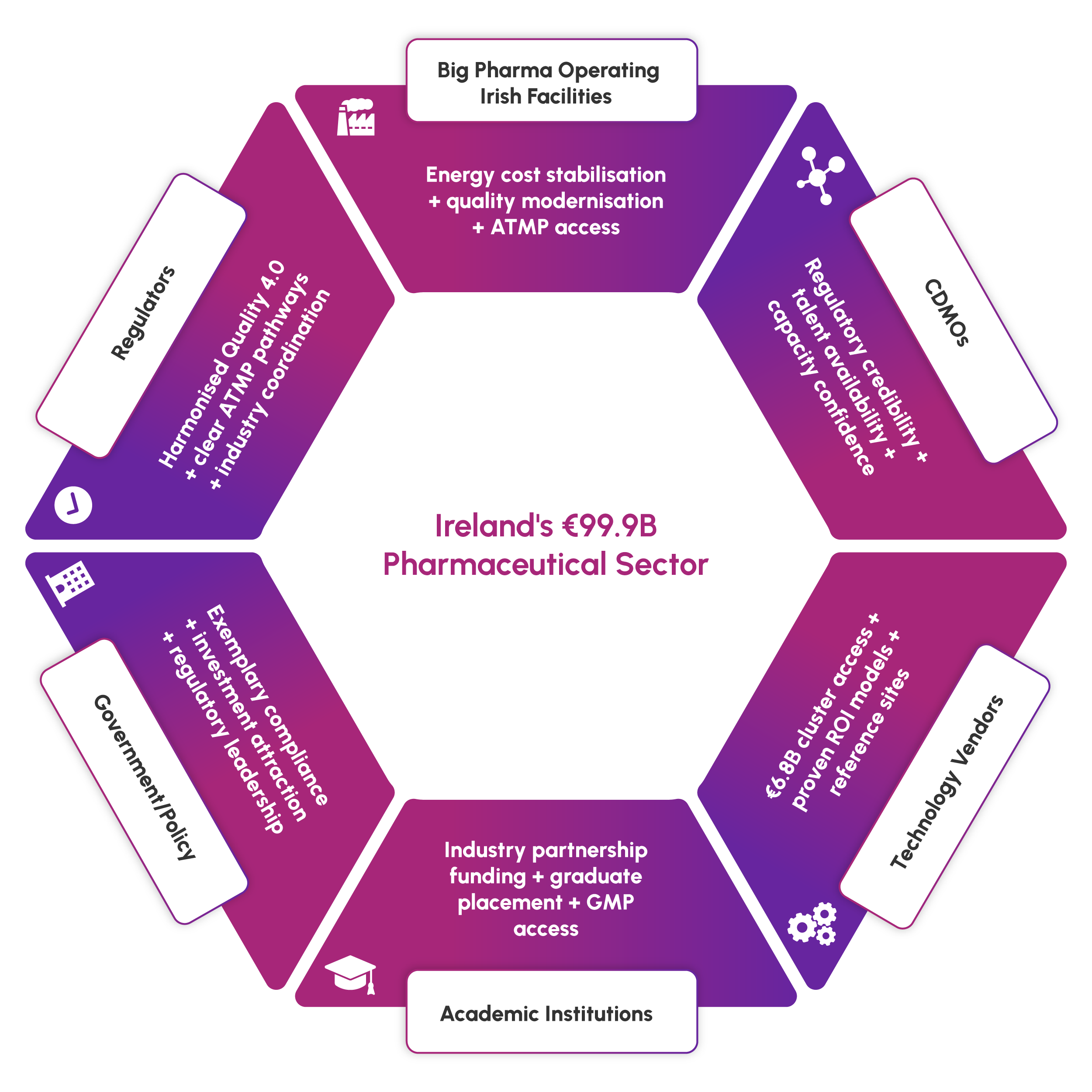
Conclusion: Ireland's Strategic Choice
Ireland faces a choice. The €99.9 billion pharmaceutical manufacturing sector can be fragmented into individual companies making isolated decisions about energy, quality, and CGT investments. That path leads to inconsistent outcomes: some companies capture emerging advantages; others fall behind. Regional competitiveness erodes incrementally.
Alternatively, Ireland can embrace a strategic posture: coordinated investment in energy solutions, systematic Quality 4.0 transformation across the 50 FDA approved plants, and deliberate ecosystem positioning in cell and gene therapy manufacturing. This path requires transparency, partnerships, and knowledge sharing at a scale. It requires venues where decisions get made; strategies get aligned, and industry peers benchmark against one another.
The questions facing pharmaceutical leaders in Ireland are pragmatic: How do we manage the energy cost burden whilst preserving the €439.9/hour productivity advantage? How do we modernise 50 FDA approved facilities to Quality 4.0 standards without disrupting continuous production? How do we position Ireland for CGT manufacturing leadership before competitors capture that market?
These questions demand engagement, dialogue, and knowledge-sharing amongst industry peers who understand the challenges intimately.