Resolving concerns and handling objections

The best way to minimise objections and concerns is to fully explore customer needs, and to present solutions full of benefits that meet them. Some concerns or objections are bound to arise, however. Resolving them effectively is will drive the sale and help grow the customer relationship.
First principles when handling objections

1.
Probe to understand the concern fully before you respond.
2.
Make sure you flush out all concerns
3.
Establish whether the concern is based on need or capability
4.
Resolve concerns in a spirit of partnership
Isolate, probe and understand
Objections could come from any number of sources. They may be based on facts or misunderstandings. They could be simply a request for information. Responding to an objection before we have understood it is damaging and counterproductive. We throw more information and argument at the prospect without really understanding what it is they need!
Phrases to help probe and understand objections in more detail:
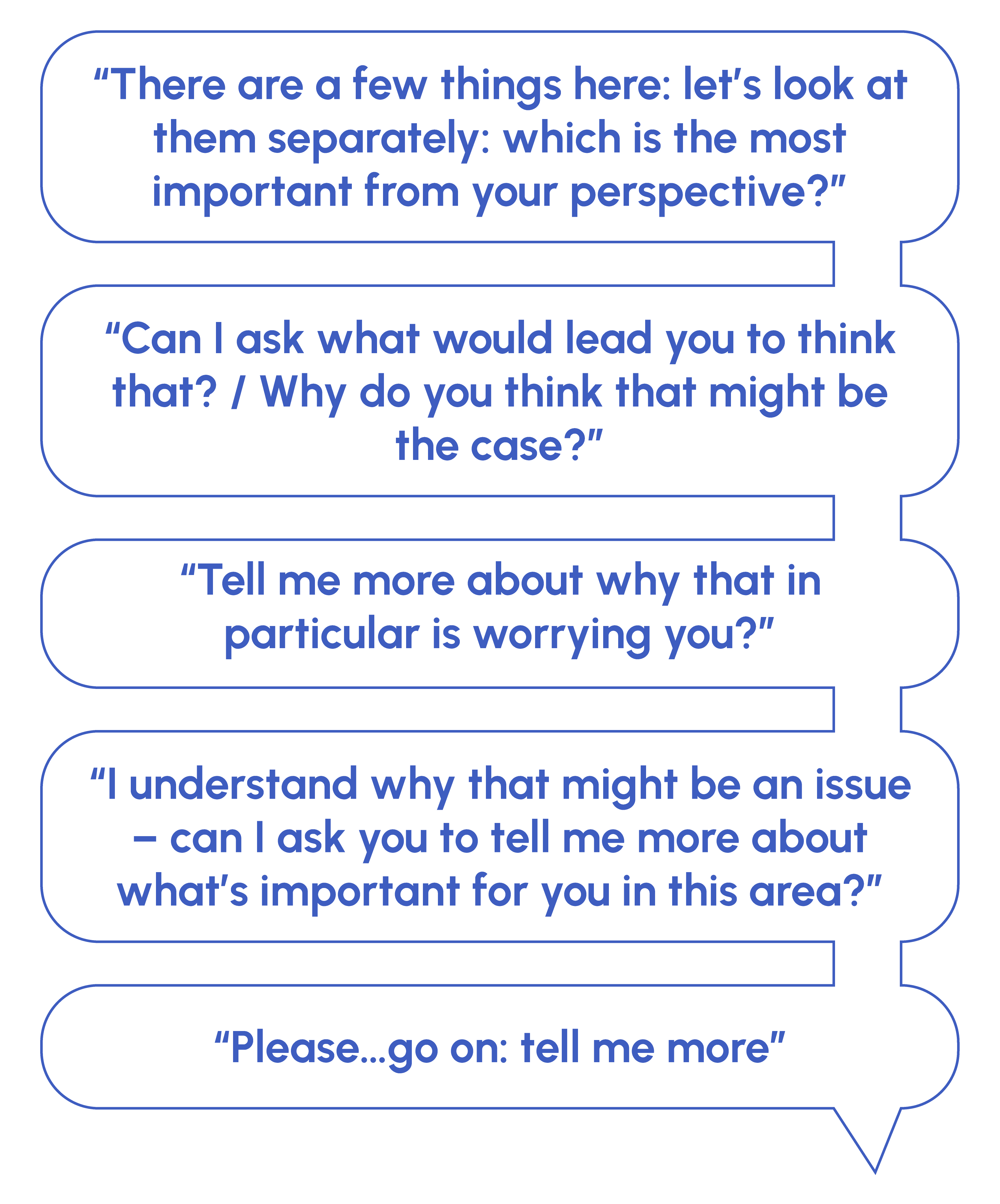
And always ask:

Value Objections are when a customer questions the value or worth of the solution you’re selling. “It’s not worth the money”; “That doesn’t offer us a good return”; “We don’t need it” In other words, to the buyer the solution doesn’t warrant the price, time effort and hassle.
Capability Objections are where the customer agrees they have a need and sees the value of a solution in principle but does not believe that we will actually deliver it.

- Clarify and demonstrate. You and the customer are moving towards a solution that you both believe will meet their needs
- Always respond calmly and with a measured tone – don’t introduce negative energy
- Avoid the word “But” – it is inherently confrontational
- First things First – always tackle the most important concern first
- Show proof of your arguments wherever you can
- Make your examples relevant to the customer
- Ask the customer what would constitute resolution and convince them
- Deal with concerns one at a time
- Check that the customer agrees with your reasoning on each point